
Maintenance of Electrostatic Precipitator
Electrostatic precipitators must be properly operated and maintained in order to ensure that the assured properties are achieved. If this is neglected, it will lead to a poorer performance.
Daily maintenance of the electrostatic precipitator is to understood as a monitoring work and the action required to keep the filter and the instrumentation functioning properly. This includes following items :
- The rapper apparatus (collecting, discharge and gas distribution) : check that the devices are running perfectly in observation of the operating and lubrication instruction.
- The high voltage equipment
- EMSR devices : check the connection and measured value recorders.

Main inspection is performed at longer intervals, during which the inner parts of the electrostatic precipitator are also inspected for corrosion and wear. A main inspection offers the opportunity to repair or replace demaged parts of those no longer functioining properly. Main inspection should be performed every 2 years or each time when a longer shut-down is scheduled. In detail check the following parts :
- hammers (collecting plate & discharge electrode & gas distribution)
- rapper bearings (collecting plate & discharge electrode & gas distribution)
- bearing shell (collecting plate & discharge electrode & gas distribution)
- drive couplings (collecting plate & discharge electrode & gas distribution)
- drive, support and bearing insulators
- corosion for collecting plate & discharge electrode
- distance between collecting plate and discharge electrode
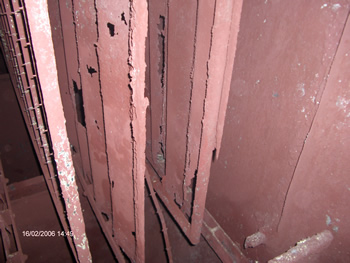
- corosion and wear control for internal walls, especially around doors.
- Intensive dust layer of collecting plate & discharge electrode
- intensive dust stack in the hopper (especially corners of hopper)
- Gas distribution system (perforated plates)
- Door sealing
- Heating elemenst (insulator heating & hopper heating etc)
- T/R connections
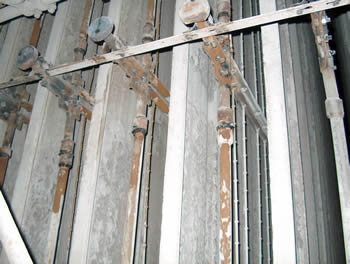
Maintenance Check List as follows:
- Check collecting plates every year
- Check discharge electrode every year
- Check discharge tips every year
- Check carriers of collecting plates every year
- Check carriers of discharge electrodes every year
- Check rapper shafts and couplings every year, replace and/or align if necessary
- Check bearings of rapper every month, replace and/or align if necessary
- Check hammers and anvils every year, replace and/or align if necessary
- Check rapper motors every day, replace and/or align if necessary, lubricate annually
- Check all insulators every year, replace and/or align if necessary
- Check doors and seals every year, replace and/or align if necessary
- Check heating element and fan every month, replace and/or align if necessary
- Check gas distribution systems every year, replace and/or align if necessary
- Check insulation every month, replace and/or align if necessary
- Check casing every year, replace and/or repair if necessary
- Check earthing belts and equipments every year, replace and/or align if necessary
Start-up procedure for Electrostatic Precipitator
Start-up procedure has 3 main phases
- Cold comissioning(2-3 days)
- Hot comissioning (2-3 days)
- System optimisation (1-2 days
Cold comissioning;
Before cold comissioning following controls should be completed :
- Make sure that mechanical and electrical assembly should be completed.
- Inside of the filter should be completely cleared up, no scraffolds, assembly aid, tools, materials etc. left inside the filter housing.
- All drives, units, dust transport systems, measuring equipments should be installed
- Earthing should be completed
- Cables should be connected
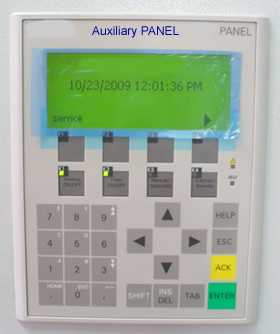
- HV cabinets and Auxiliary control cabinet is ready for start-stop
- Access to the filter (doors) should be closed, all safe regulations should be applied.
- Insulator heating system should be checked
- Hopper heating system should be checked
- Hopper vibrators should be checked
Functional test should be done as follows:
- Switch on the power to the auxiliary control cabinet
- Check the rotation direction of drives for all rapping systems step by step
- Check the rotation direction of fan(s)
- Switch on the all heating systems (insulator & hopper heatings etc). Check the level of heating. Set the temperature control, check the safety thermostats. Check the flow gauge
- Check the level controls
- All the rapping system should be run approx. 24 hours, sunsequently check the rappers for loose parts and correct functioning.
- Check the local switches for correct functioing.
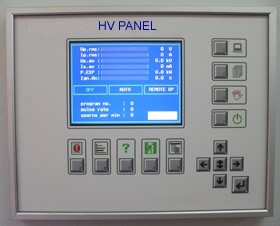
- Switch on the high voltage cabinet, apply the high voltage
- Check and save the applied voltage and current values
- Check the voltage/current diagram
Hot comissioning;
As with cold comissioning plus;
- Auxiliary drive control should be fully functional
- Insulation should be completed
- Dust conveying system should be fully functional
- All the heating system should be fully functional execution is as follows:
- Check the filter doors are closed and safe (very important)
- Swicth on heating system before 2-4 hours of HV running
- Switch on rappers
- Switch on dust conveying systems
- Switch on the high voltage units
System optimization;
Optimize the high voltage controller and rapping time.
Alarm and Errors for Electrostatic Precipitator
Operating personel must be familiar with the electrostatic precipitator system because every disturbance which impairs the filter's performance can be recognised directly from a change in the electrical data for each single zone.
Observing the voltage and current values is very important and gives some information about the precipitator's performance. The operator should record these values. Major changes in the filter, whether this concerns reductions in the distance between the electrodes, short circuits via creepage paths in the insulators or back-jam of dust in the filter hoppers down into the electrical field, can be recognised in this way without needing to inspect inside the filter.
There are some common symptoms as follows:
- Voltage suddenly falls to almost zero, the nominal current is on, the system goes down after a time between 2 and 60 seconds set on the minimum detectors and errors are displayed.
- This very likely points to a short circuit in the filter system, perhaps caused by a electrode rapture, back-jam, dust from the collecting hoppers or an insulator breakage.
- Heavy flash over activity suddenly starts, the voltage drops at the same time
- This occurs when the distance between collecting plate and discharge electrodes are so close. There would be some raptured electrodes but there is not directly contact between collecting plates and discharge electrodes. Or there is a fresh air suction points in the casing especially around the doors (seals are not good enough)
- Slow increase of flash over activity in a single zone
- This is generaly caused by a defect either in the discharge electrode or collecting plates rappers. The rapping system is not running properly.
- Slow increase of flash over activity in all zones, voltage change in all zones
- This symptom normally has nothing to do with the filter, but rather with a change in the behaviour of the boiler or firing system. Fuel changes and additional firing systems could also be the cause.
Designed by Murat Erdem
Mursoft 2011